Why AI Agents Could Outperform Classic APIs
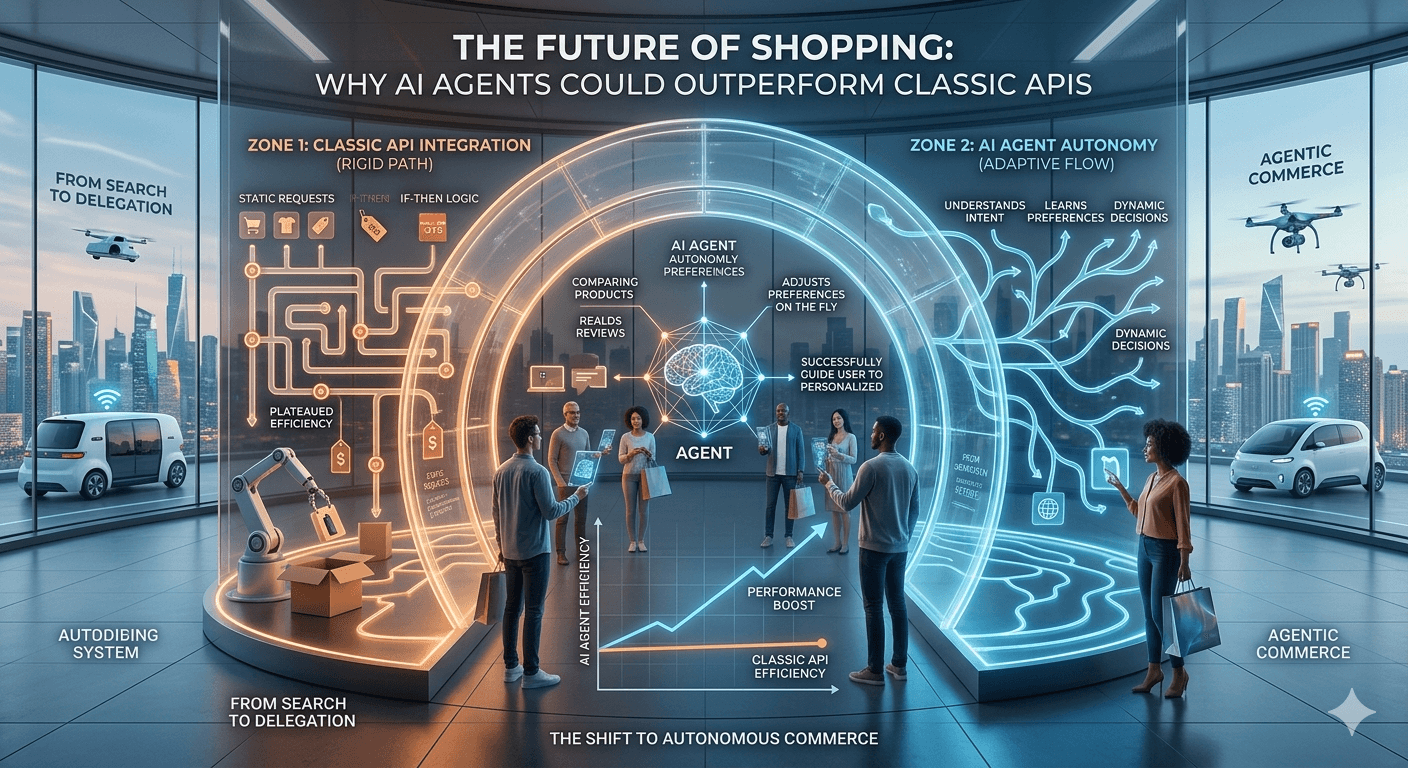

As e-commerce continues to evolve, the way consumers interact with products and services is being reshaped by artificial intelligence. Traditionally, shopping platforms have relied on APIs to connect systems, retrieve product data, and handle transactions. While effective, APIs are inherently limited—they are rigid, require structured queries, and often demand technical expertise to integrate across platforms. Enter AI agents: autonomous, intelligent systems capable of understanding natural language, predicting preferences, and completing complex tasks with minimal human input. AI agents promise to make shopping more personal, seamless, and efficient. Unlike traditional APIs, which respond to specific commands, AI agents can interpret vague or multifaceted requests. For instance, a shopper might tell an AI agent, “Find me a lightweight running shoe suitable for rainy weather under £100.” The agent can parse this request, check multiple retailers, evaluate reviews, and even suggest complementary products, all in a single interaction. No complex API calls or manual filtering required. Another advantage lies in dynamic decision-making. Classic APIs return predefined data, leaving the interpretation and next steps to the user or developer. AI agents, however, can reason, prioritise, and negotiate across multiple sources. This means they can proactively recommend alternatives when stock runs out, optimise delivery options based on cost and speed, or adjust choices to match a shopper’s past behaviour and preferences. AI agents also enhance cross-platform experiences. While APIs often require integration with each individual retailer or service, AI agents can aggregate information across multiple stores and ecosystems. This reduces friction for consumers and enables a truly unified shopping experience. For example, an AI agent could plan an entire outfit or coordinate ingredients for a recipe, sourcing items from several vendors while managing budgets and delivery schedules. There are operational benefits for businesses as well. AI agents can reduce customer support load by autonomously handling inquiries, order modifications, and returns. They can also provide deeper insights into consumer behaviour, adapting in real time to trends and demand patterns—something static APIs cannot achieve on their own. However, the shift is not without challenges. AI agents require robust training, careful privacy safeguards, and transparent decision-making to avoid bias or errors. They also depend on high-quality, up-to-date data, which can be difficult to maintain across multiple sources. Despite these hurdles, the potential for more intelligent, adaptive, and human-like shopping experiences makes AI agents a compelling alternative to traditional API-driven architectures. In essence, the future of shopping may be defined less by endpoints and calls, and more by autonomous, intelligent agents that can think, adapt, and act on behalf of consumers. By moving beyond rigid API structures, retailers and platforms can offer experiences that are faster, more personalised, and more capable of meeting the complex needs of modern shoppers.
Related Insights

·
11 min read
Modernising Financial Apps: Next-Gen API Integration

·
3 min read
VC Technical Due Diligence Checklist for Startup Apps

·
2 min read
Building Scalable Fintech Apps: Security & High Throughput

·
4 min read
The AI Prototype Trap
·
8 min read
UX for Legal Claim Funnels

·
8 min read
Accessibility Is Product Quality